Why One Carpenter Quotes Three Times More Than Another
Materials, hardware, joinery, finish, installation and warranty: what really explains the gap between two quotes for the same job.
You get two quotes for the same kitchen. Same measurements, same drawing, same color. One comes in at three times the other. The natural reaction is to assume the expensive one is overcharging or the cheap one is a steal. It’s almost never either: the two pieces of paper describe different cabinets, even if they look identical in the rendering.
Materials: plywood, MDF and particleboard
The cabinet box is where price changes the most and where you see it the least.
- Particleboard (wood particles pressed together with glue, usually covered in melamine): the cheapest option. It works in dry areas, but once water gets in, it swells and there’s no saving it. It also doesn’t hold screws well after they’ve been tightened and loosened a few times.
- MDF (medium-density fiberboard): a very smooth surface, ideal for painted doors. It’s heavy and doesn’t handle moisture either.
- Plywood (thin layers of wood glued in alternating directions): more expensive, lighter, and far more resistant to water and daily use. Screws bite better and it holds up to repairs.
One quote may build the whole kitchen in particleboard and another in plywood with MDF doors. On paper, both say “custom cabinets.”
Hardware and joinery
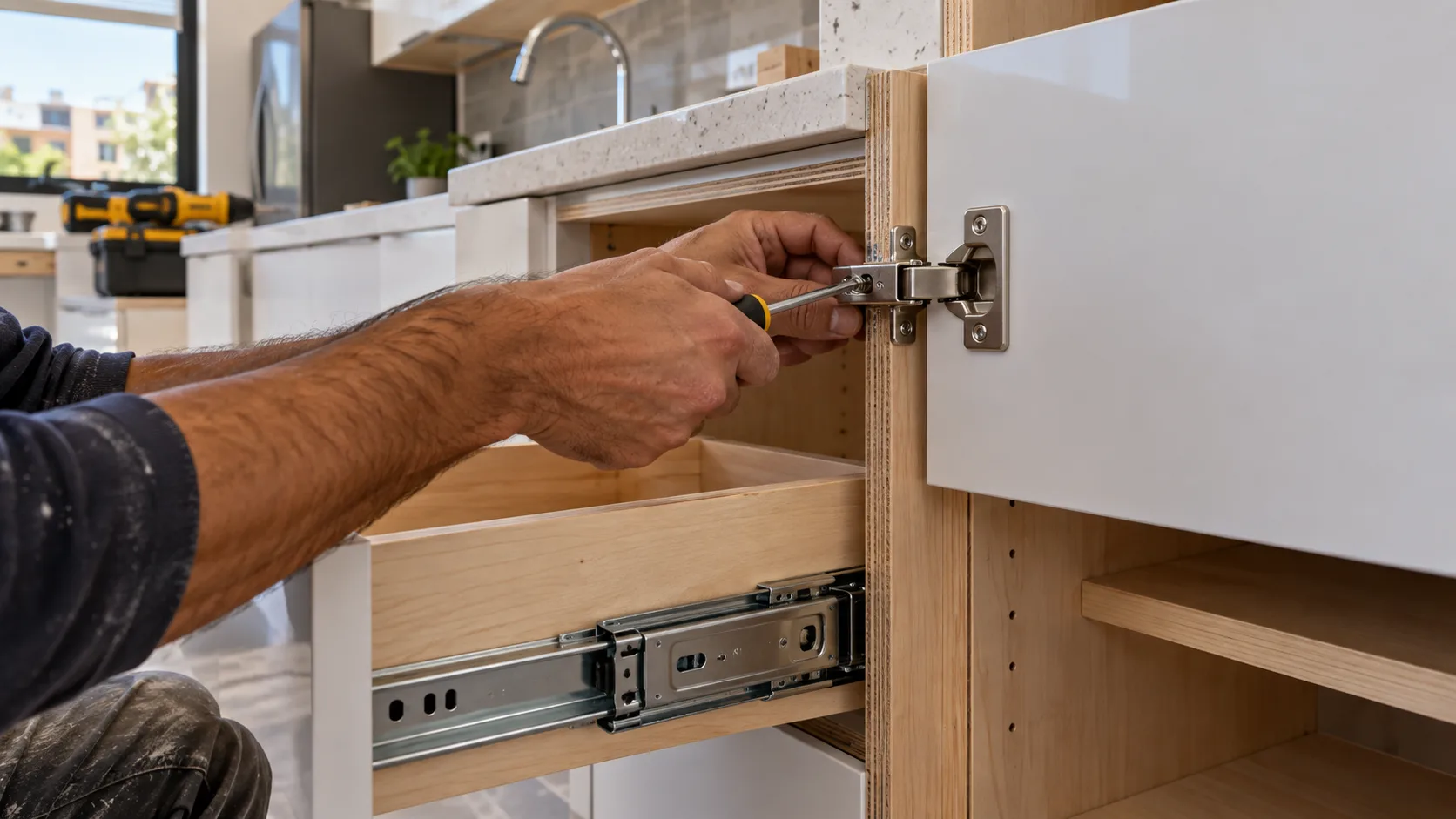
Hardware (hinges, drawer slides, lift mechanisms, pulls) is what moves, so it’s the first thing to fail. There are generic hinges and there are name-brand soft-close hinges rated for tens of thousands of cycles. There are slides that open a drawer three-quarters of the way and full-extension slides that pull it all the way out and carry more weight. Multiply that by thirty or forty doors and drawers and the price gap gets huge.
Joinery (how the pieces are put together) matters too. A drawer held together with staples and glue won’t last like one built with dovetails or tongue-and-groove joints. Ask how the boxes and drawers are assembled: a good carpenter will explain it without hesitation.
Paint and finish
This is one of the biggest differences, and it rarely shows up on the quote. A door painted on site with a brush or roller is not the same as one spray-finished in a shop, with primer, sanding between coats, and several layers of catalyzed lacquer (a finish that hardens chemically and stands up to bumps and cleaning). The first looks fine on delivery day; the second still looks good years later. It also matters whether the edges and back faces are sealed, because that’s where moisture gets in.
Installation
Installing isn’t just driving screws. A proper install levels every cabinet even when the floor and walls are out of square (they almost always are), anchors the upper cabinets into the wall framing, and adjusts every door so the gaps are even. Some low quotes leave out tearing out the old cabinets, hauling debris, plumbing or electrical adjustments, and trim and toe kicks. Then those “extras” show up halfway through the job.
What you don’t see: overhead and warranty
Overhead is the fixed cost of running the business: shop, machinery, liability insurance, licenses, payroll, vehicles. A carpenter working alone, uninsured, out of a garage can charge less. The question is what happens if something goes wrong inside your home.
The warranty also has a cost. If the quote includes coming back to adjust doors after a few months, or standing behind a broken hinge or a peeling door front, that commitment is built into the price. Ask for the warranty in writing, stating what it covers and for how long.
Customization and how to compare two quotes
“Custom” comes in degrees. One carpenter may adapt standard-size modules and fill the gaps with filler strips. Another builds every piece for your space, with interior dividers, pull-out accessories, and trim that runs up to the ceiling. Both are valid, but they don’t cost the same.
To compare fairly, ask both quotes to spell out the same things:
- Material for the boxes, doors and backs.
- Brand and type of hinges and slides.
- Type of finish and where it’s applied (shop or on site).
- What installation includes and what it leaves out.
- Written warranty, with length and coverage.
- Whether the carpenter is insured and who takes the final measurements.
Once you line the two quotes up on these points, the price difference almost always explains itself. Sometimes the cheaper one is the right call; sometimes you’ll pay the difference later, in repairs.
If you have one or more quotes and aren’t sure what you’re comparing, we can look at your project and give you a detailed, line-by-line estimate so you can decide with all the facts.